
iGreenAsia’s guide explains how to detect active roosts—daytime clusters, droppings, stains, evening emergence, and fresh guano—then when to act for health or structural risk. It recommends mapping entry points, installing stainless-steel mesh and one-way exclusion devices, and sealing gaps with flexible non-toxic caulk outside maternity season bat pest control. Proven non-toxic deterrents include low-level LED lighting, citrus-based sprays, and evaluated ultrasonic units. It advises consulting licensed exclusionists for pups or complex cases and offers practical prevention and monitoring steps for homeowners who want more guidance.

How to Tell If Bats Are Roosting and When to Act
When evaluating whether bats are roosting on a property https://igreenasia.com/, basic visual and acoustic cues provide the most reliable initial evidence: daytime sightings of bats clustered under eaves or in attic spaces, dark staining and droppings on surfaces beneath suspected entry points, and audible chirps or scratching within walls indicate active roosting; additionally, increased insect activity around entry sites at dusk and the regular evening emergence of multiple individuals confirm presence.
Observers should note patterns of nocturnal activity and guano accumulation as measurable indicators: fresh, dark pellets and concentrated deposits beneath likely roosts suggest recent use. Photographic records and timed observations at dusk establish frequency.
Action is warranted when evidence indicates active occupation, when health risks from guano accumulation rise, or when structural damage is evident.
Seal and Modify Habitat: Weatherproofing, Exclusion Points, and Bat-Safe Caulking
Once occupancy has been confirmed, the next step is to reduce attractiveness and entry opportunities by sealing and modifying the building envelope. The approach prioritizes durable weatherproofing materials and proven exclusion techniques to protect both home and wildlife.
Inspect soffits, eaves, vents and gaps at dusk; document potential roosts and airflow pathways. Use bat-safe caulking and mesh to close openings larger than a pencil while leaving temporary one-way exits until bats depart. Apply insulation and vapor barriers where drafts concentrate to remove thermal cues that attract bats. Work with local wildlife guidelines to avoid exclusion during maternity season.
- Inspect and map all potential entry points around roofline, vents, and chimney
- Install stainless-steel mesh and bat-friendly one-way exclusion devices
- Seal gaps with flexible, non-toxic caulk and appropriate weatherproofing materials
Non-Toxic Deterrents That Work: Lights, Smells, Ultrasound, and Recommended Products
For homeowners seeking humane, low-risk methods to discourage bats from roosting in and around structures, a combination of targeted lighting, scent barriers, and ultrasonic devices—used according to evidence and product guidelines—can reduce attractiveness without harm.
Research indicates that steady LED lights placed at entry points make spaces less appealing to many bat species; avoid bright fixtures that disturb neighbors.
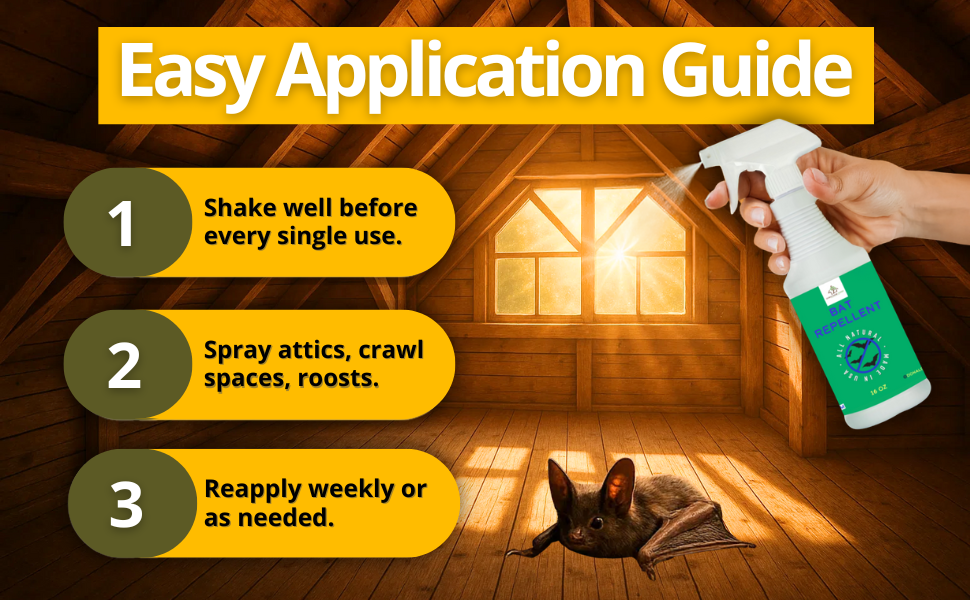
Citrus sprays, applied sparingly around exterior crevices and soffits, can mask odors bats use to navigate, but should be non-toxic and plant-safe.
Ultrasonic devices show mixed results; choose models tested for frequency range and directional output, and follow manufacturer placement recommendations.
Recommended products combine low-energy LED fixtures, eco-friendly citrus-based repellents, and professionally rated ultrasonic units for best deterrent synergy.
Safe Removal and When to Call a Pro: Handling Pups, Seasonal Restrictions, and Licensed Bat Exclusionists
After trying non-toxic deterrents, homeowners may still encounter situations that require careful handling or professional help, particularly when bats are present with pups or during legally protected seasons.
A clear, evidence-based approach favors minimal disturbance, observing roosts to determine presence of young, and respecting seasonal permitting rules that protect maternity colonies.
When risks to people, pups, or structures arise, consult licensed bat exclusionists who follow humane exclusion techniques and local regulations.
Proper bat handling by untrained individuals is unsafe and often illegal; professionals use approved methods, timing exclusions outside maternity periods, and obtain necessary seasonal permitting.
- Observe roost timing and signs before action.
- Prioritize exclusion after pups are independent.
- Contact licensed exclusionists for complex cases.
Long-Term Prevention and Yard Practices: Landscaping, Attic Maintenance, and Monitoring Tips
In planning long-term bat prevention, homeowners should combine targeted landscape choices, routine attic maintenance, and periodic monitoring to reduce attractants and seal entry points while preserving wildlife-friendly practices; evidence shows that reducing exterior lighting toward potential roosts, trimming tree limbs away from roofs, maintaining intact soffits and ridge vents, and repairing gaps larger than 1/4 inch can markedly lower the likelihood of future colonization.
Regular inspections of rooflines, eaves, and vents identify breaches early. Yard strategies favor native plantings placed away from walls to support insects without drawing bats to structures.
Implement rainwater management so gutters and downspouts do not create damp sheltered areas attractive to insects and bats. Install bat-friendly monitoring such as nightly surveys or motion-activated cameras and document changes to adapt prevention measures over time.
Conclusion
To summarize, homeowners should rely on clear signs—droppings, staining, evening activity—to determine bat presence and act with timing and care. Priority measures include sealing entry points with bat-safe materials, employing proven non-toxic deterrents, and avoiding disturbance of pups. Professionals should be engaged for exclusion during restricted seasons or complex infestations. Ongoing prevention—routine attic inspections, sensible landscaping, and monitoring—sustains results while protecting bats and home health through evidence-based, practical practices.
…








 International trade is defined as any economic activity in which both companies and people from different countries exchange products or services. These exchanges can be imports or exports.